
Pierre Louÿs, The Young Girl's Handbook of Good Manners for Use in Educational Establishments, Trans by Geoffrey Longnecker, Wakefield Press, 2010.
read it at Google Books
A bestselling author in his time, Pierre Louys (1870-1925) was a friend of, and influence on, Andre Gide, Paul Valery, Oscar Wilde and Stephane Mallarme among others. He achieved instant notoriety with Aphrodite and The Songs of Bilitis, but it was only after his death that Louys' true legacy was to be discovered: nearly 900 pounds of erotic manuscripts were found in his home, all of them immediately scattered among collectors and many subsequently lost. Since then, it has become clear that Louys is the greatest French writer of erotica there ever was. The Young Girl's Handbook of Good Manners was the first of his erotic manuscripts to see publication, and it also remains his most outrageous-an erotic classic in which humor takes precedence over arousal. By means of shockingly filthy advice-ostensibly offered "for use in educational establishments"-couched in a hilariously parodic admonitory tone, Louys turns late-nineteenth-century manners roundly on their head, with ass prominently skyward. Whether offering rules for etiquette in church, school or home, or outlining a girl's duties toward family, neighbor or God, Louys manages to mock every institution and leave no taboo unsullied. The Young Girl's Handbook of Good Manners has only grown more scandalous and subversive since its first appearance in 1926.
The first of Pierre Louÿs’s erotic works to see publication after his death, The Young Girl’s Handbook of Good Manners is also his most outrageous, and one of the few erotic classics in which humor takes precedence over arousal. By means of shockingly filthy advice and a parodic format, Louÿs turns late nineteenth-century manners roundly upon their head, with ass prominently skyward. Whether he is offering rules for etiquette in church, school, or home, or outlining a girl’s duties toward family, neighbor, or God, Louÿs manages to mock every institution, leaving no hypocrisy unexposed. The book has only grown more scandalous and subversive than when it first appeared in 1926.
Pierre Louÿs (1870–1925) was a best-selling author in his time, and a friend of and influence on such luminaries as André Gide, Paul Valéry, Oscar Wilde, and Stephane Mallarmé. He achieved instant notoriety with Aphrodite and The Songs of Bilitis, and his 1898 novel The Woman and the Puppet has been adapted for the screen in such noteworthy films as Josef von Sternberg’s The Devil Is a Woman and Luis Buñuel’s That Obscure Object of Desire. But it was only after his death that his true legacy was to be uncovered: nearly nine hundred pounds of erotic manuscripts were discovered in his home, all of them immediately scattered among collectors and many lost. The body of work that has since been gathered—manuscripts continue to be discovered—leaves little doubt: Louÿs is the greatest French writer of erotica there ever was.

“Louÿs entered eroticism the way others enter politics or religion”— Jean-Paul Goujon
“One of the great and glorious erotomaniacs of the end of the nineteenth century and the beginning of the twentieth”— André Pieyre de Mandiargues
“This is just the book to give your niece—if she’s a quiet, neat, straight-laced girl.”—A. D. Jameson
These are the first two books published by the new Wakefield Press, based in Cambridge, Massachusetts and seemingly run by Marc Lowenthal, translator of Nerval, Picabia, and Queneau. These two books are small both in size and in page count (the Louÿs is 76 pages, the Balzac 110), but they’re beautifully produced and worthy of attention.
Louÿs’s posthumously published Young Girl’s Handbook of Good Manners is an unabashedly pornographic parody of etiquette manuals, an aphoristic list of instructions for how one should behave “In Class,” “At Confession,” “At the Seaside,” and “With the President of the Republic,” as well as “Duties Toward Your Father,” “Duties Toward Your Mother,” etc. Like most etiquette manuals, it’s largely aspirational: Louÿs’s schoolgirls are sexual dynamos, and the overall effect is rather like the 120 Days of Sodom‘s ever more complex permutations for permutation’s sake, but this is funnier than mathematical. An echo might be found in Louis Aragon’s Dadaist parody of François Fénelon’s Adventures of Telemachus, though that would seem to have been published earlier than the Handbook: an argument could be made for Louÿs being Dadaist before the fact.
A few of the maxims in the Handbook, in translation by John Harman, appeared in Atlas’s edition of Remy de Gourmont’s The Book of Masks; that translation seemed distractingly British to me. A previous edition was published by Grove Press’s Zebra series translated by Richard Seaver (as Sabine D’Estrée); a shoddy print-on-demand edition that claims to be a reprint of an Olympia Press edition is still in print, with no translator given. Wakefield’s edition perhaps more respectable than the work deserves: Longnecker’s introduction is brief, but contextualizes the work.
The introduction to the Handbook quotes a letter from Louÿs to his brother, declaring that he wanted “to burn everything before dying, with the satisfaction of knowing that the work will remain virgin, that one will have been the only one to know it as well as create it . . . that it will not have been prostituted” (p. vii). This desire for a zero-sum life resonates with the ideas of Balzac in his Treatise for Elegant Living, an incomplete manual of dandyism meant to be part of his Comédie humaine alongside his Physiology of Marriage in his Études analytiques. Balzac’s work begins by dividing men into three parts: the man who works, the man who thinks, and finally the man who does nothing. Three different kinds of life are lived by these men: the busy life, the artist’s life, and the elegant life. The elegant life is what concerns Balzac here: the artist, he explains, is a special case, elegant by definition. But the artist who produces is not fully elegant: the truly elegant man should create and accomplish nothing.
This is an odd book: Laurence Sterne is invoked more than once, and this is almost a book about writing a book about elegant living. Partially this is because the book is unfinished. After a meeting with Beau Brummell, the author (and his friends, it seems) decide what the book will consist of going forward:
And so the subject matter to be dealt with in the second part was adopted unanimously by this illustrious parliament of fashionophiles, under the title: GENERAL PRINCIPLES of elegant living.
The third part, concerning THINGS PROCEEDING DIRECTLY FROM THE PERSON, would be divided into several chapters:
The first will comprise clothing in all its parts. An initial paragraph will be devoted to men’s clothing, a second to women’s clothing; a third will offer an essay on perfumes, baths, and hairdressing.
Another chapter will provide a complete theory on walking and deportment. (p. 39)
Of course this never really happens. A few of the general principles are elaborated; Jeffries’s notes point out that the “complete theory on walking and deportment” became the essay Theory of Walking, but we’re left to wonder what this book might have been. Of course, leaving the book unwritten is the proper course of action for the dandy; and one wonders if Balzac turned away from dandyism to write; certainly, the images that we have of Balzac, a hard-working artist if ever there was one, don’t suggest the dandy. Potential, maybe, is what matters.
The book proceeds by generating aphorisms, 53 in total: perhaps this list of aphorisms was to be the real treatise. Generating these is something of a struggle: arguments are ploughed through, and at the end aphorisms emerge:
XIII. One must have studied at least as far as rhetoric to lead an elegant life.
XVI. A banker who reaches the age of forty without having gone into voluntary liquidation, or who has more than thirty-six inches in girth, is the damned soul of elegant living: he will see paradise without ever entering it.
The elegant are not the rich; rather, being elegant is a far more complicated proposition, tied up in the character of Beau Brummell, living in Boulogne, in exile from his creditors. Brummell is a new sort of man:
It would be difficult to express the feeling that took hold of us when we saw this prince of fashion: it was one of both respect and joy. How not purse one’s lips enigmatically when seeing the man who had invented the philosophy of furniture and vests, and who was going to pass on to us axioms on pants, grace, and harnesses? (p. 31)
The dandy of 1830 is an odd figure, not the Wildean figure of the dandy that’s been received since. A lengthy introduction (as well as well-researched notes) by translator Napoleon Jeffries help to explain what Balzac was approaching; there’s still something essentially strange here, which is reassuring.
These are, it needs to be stressed, beautiful little books, some of the nicest I’ve seen recently in the mass-market literary world. French flaps on paperbacks have become de rigueur for any small press with artistic pretensions; but Wakefield excels in being well-designed inside and out. Garamond Premier is used for most of the type, with decorative swashes where called for; hung punctuation suggests that there’s a designer (nameless, in the best tradition) who’s done serious thinking about how an elegant book should appear. They’re also cheap for how well they’re done. Wakefield’s forthcoming catalogue (Perec translated by Lowenthal in September, with Péret, Fourier, and Paul Scheerbart to follow) looks fantastic. It’s difficult to imagine many others – with the exceptions, maybe, of Atlas or Exact Change – doing such an attentive job with the material. - withhiddennoise.net/
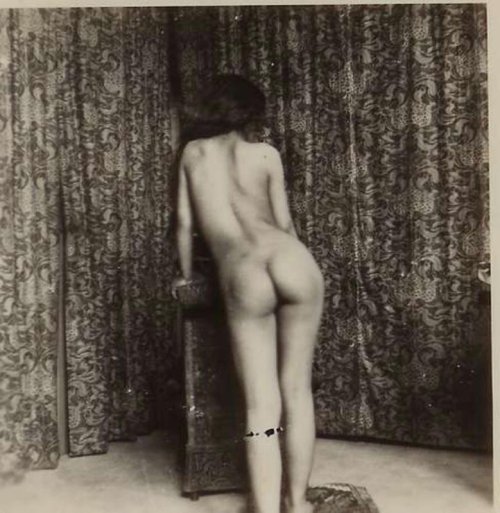
Pierre Louÿs, Pybrac, Trans. by Geoffrey Longnecker, Wakefield Press, 2014
Quite possibly the filthiest book of poems ever written, Pybrac was first published posthumously in 1927 (in an edition of 105 copies), but Pierre Louÿs had worked on it in secret throughout his life. Its 313 mockingly moralistic quatrains represent just a fraction of the more than 2,000 that were purportedly scattered in manuscript form in auctions after his death; yet like all things erotic, what remains nonetheless conveys a sense of unending absurdity and hypnotic obsession. In turns amusing and offensive, Pybrac offers a taste of what the Marquis de Sade may have produced if he had ever turned his hand to verse.